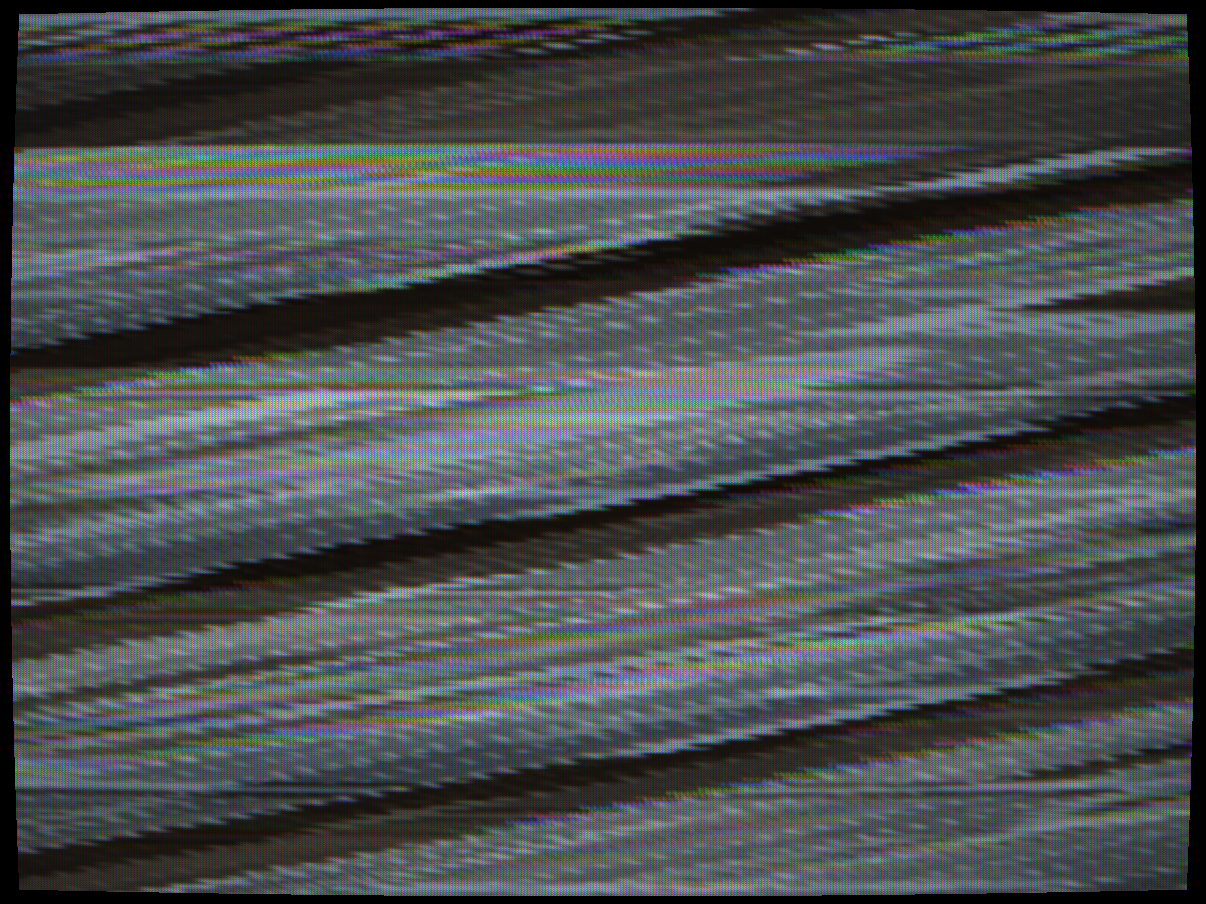
 SYNC SUPPRESS
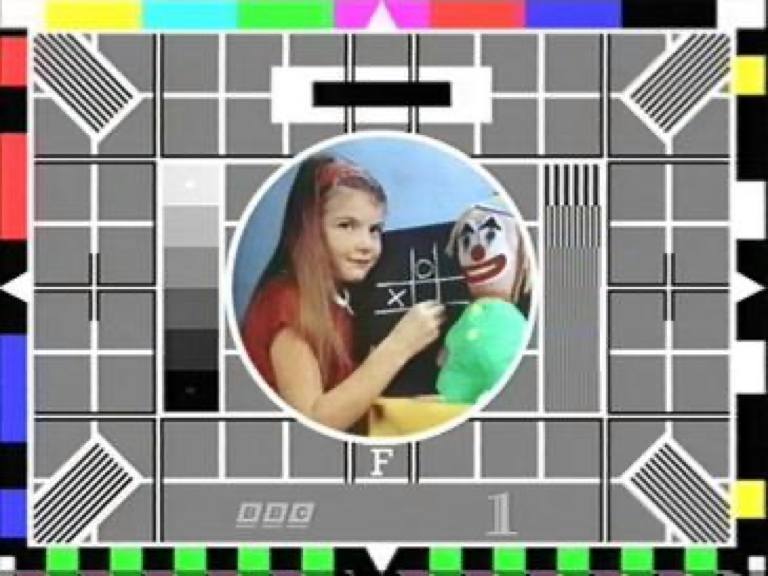
CLEAN
SYNC SUPPRESS
CLEAN
Sync suppression: V-roll, H-tear, colour cycling
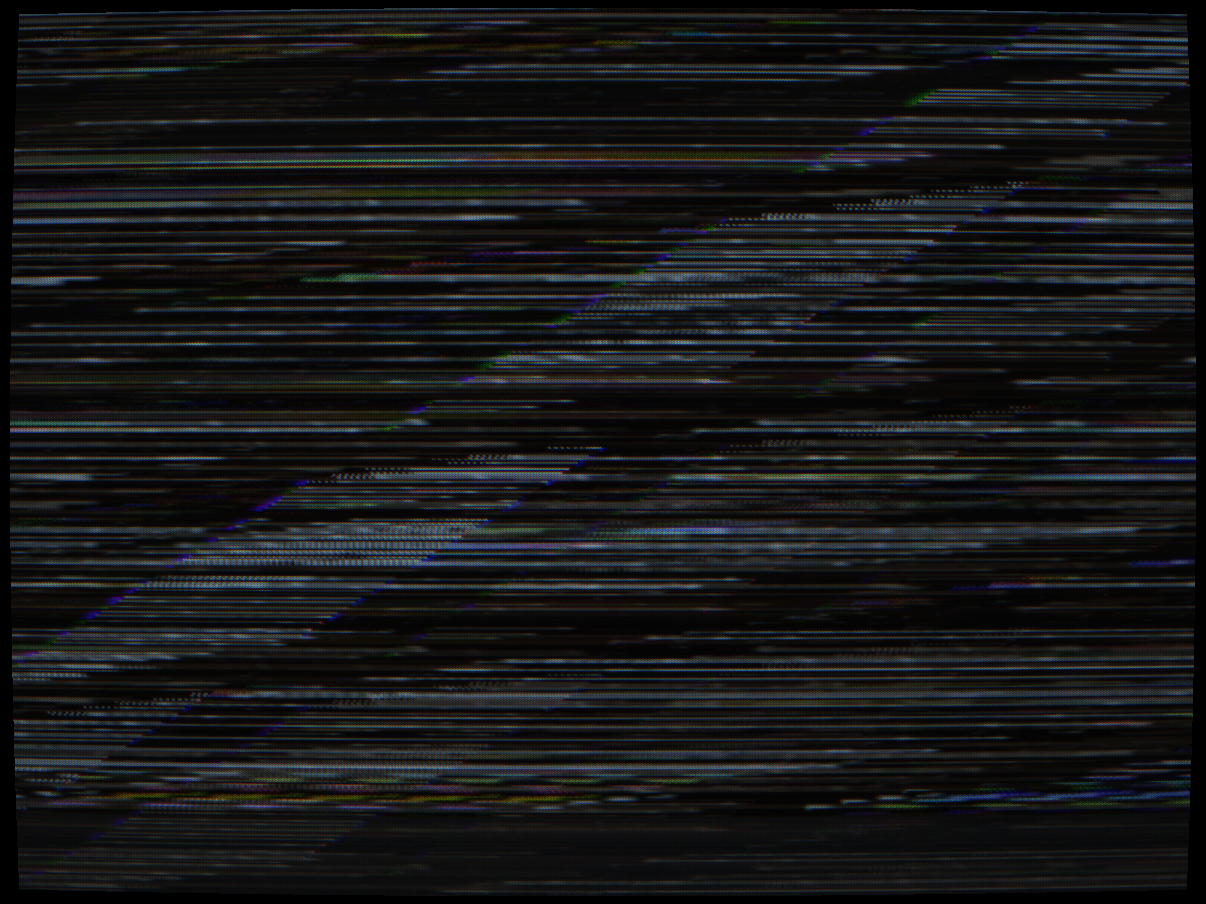
 VIDEO INVERSION
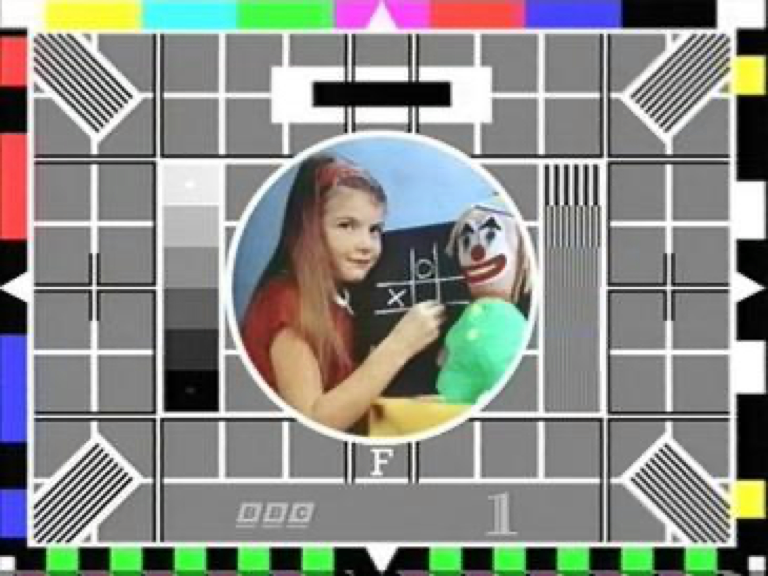
CLEAN
VIDEO INVERSION
CLEAN
VideoCipher II: sync suppress + per-line LFSR inversion
 CUT-AND-ROTATE
CLEAN
CUT-AND-ROTATE
CLEAN
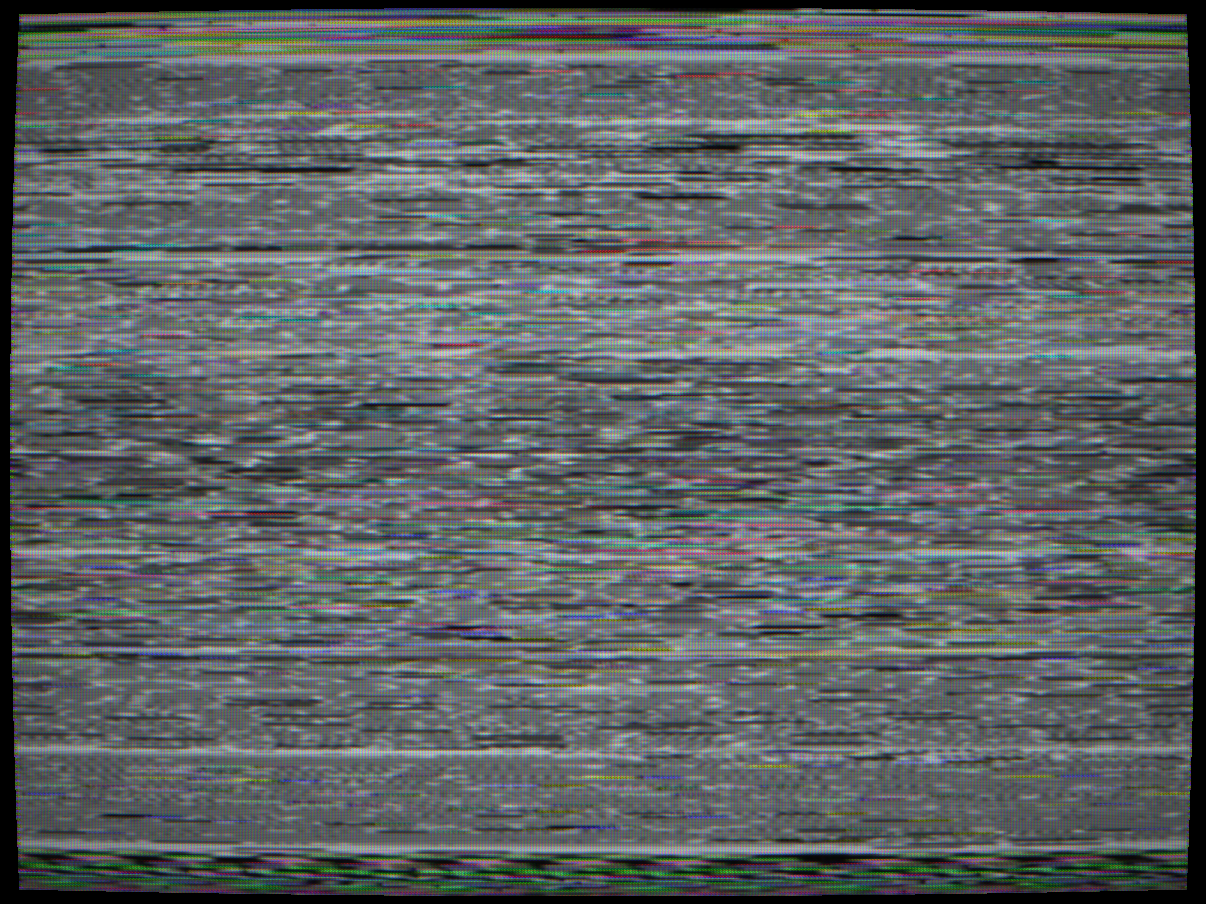
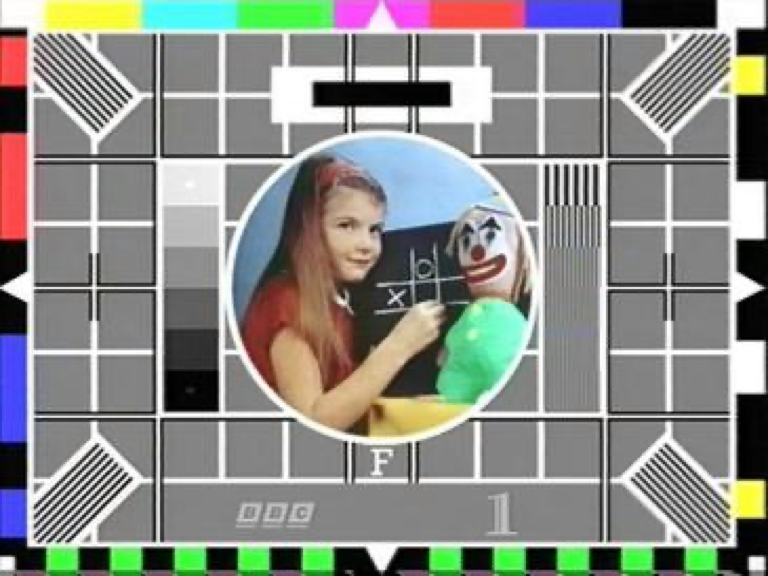
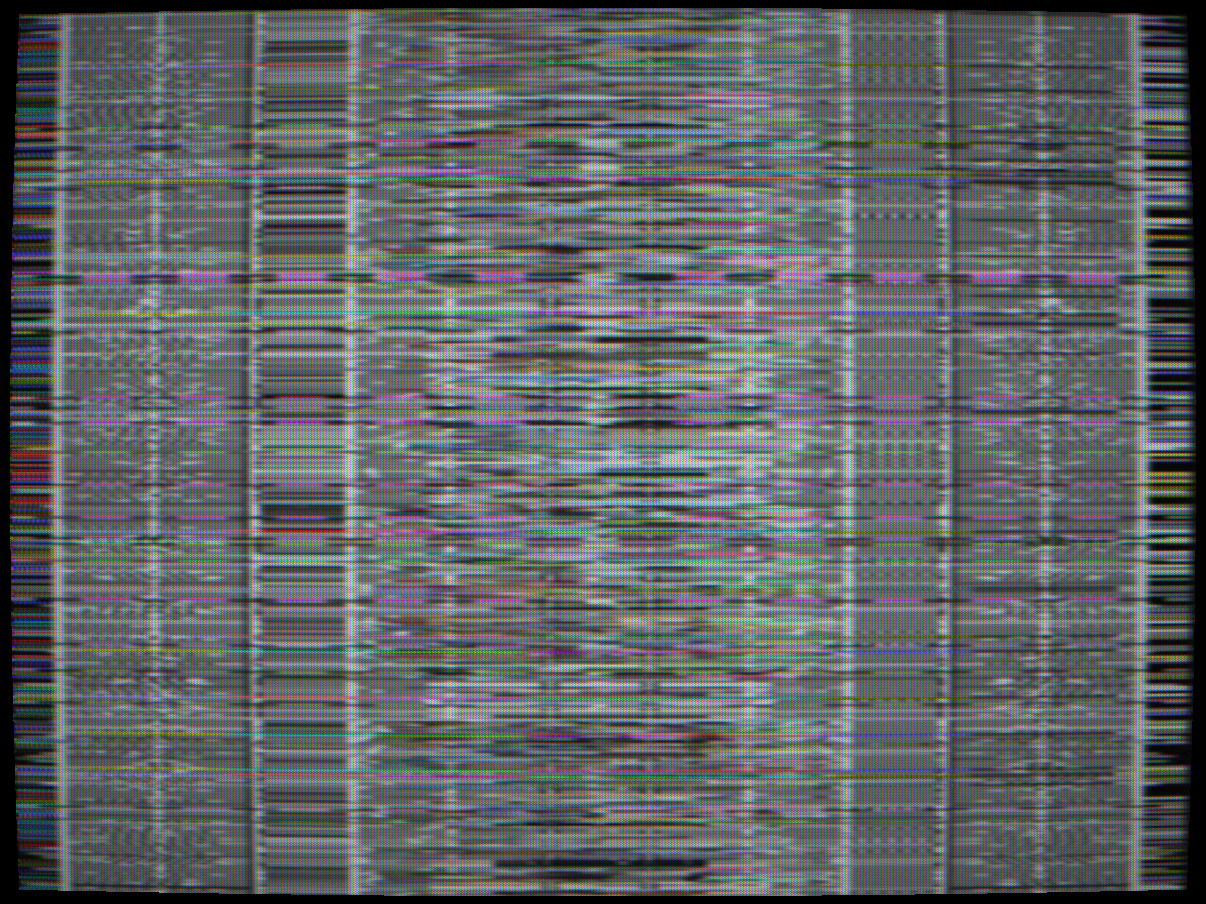
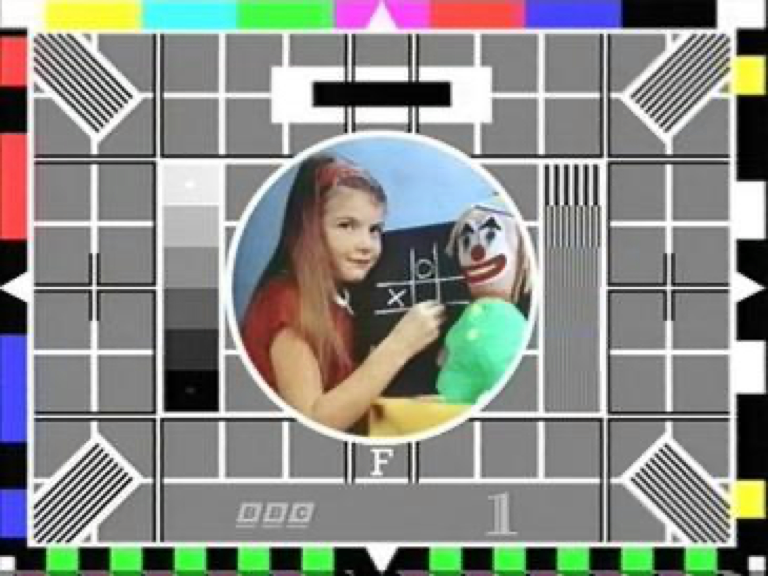
Videocrypt: per-line circular rotation, sync intact
 LINE SHUFFLE
CLEAN
LINE SHUFFLE
CLEAN
Nagravision: full-field permutation, lines intact
 SSAVI
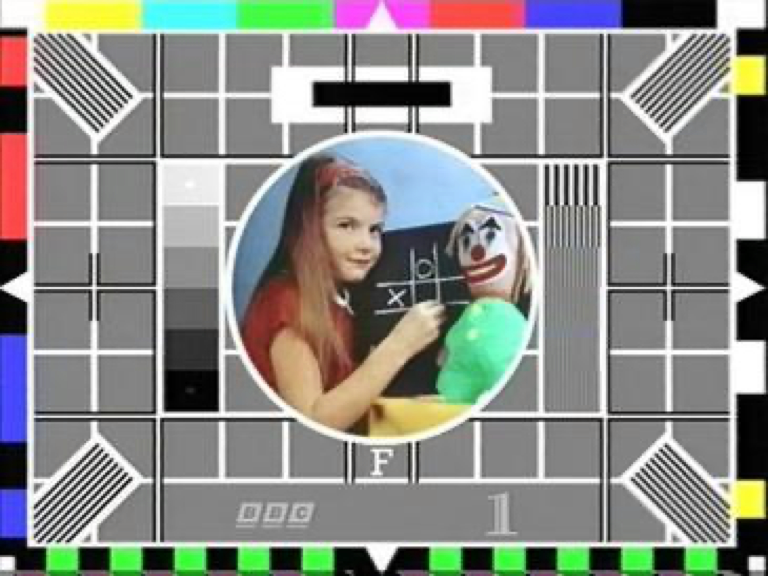
CLEAN
SSAVI
CLEAN
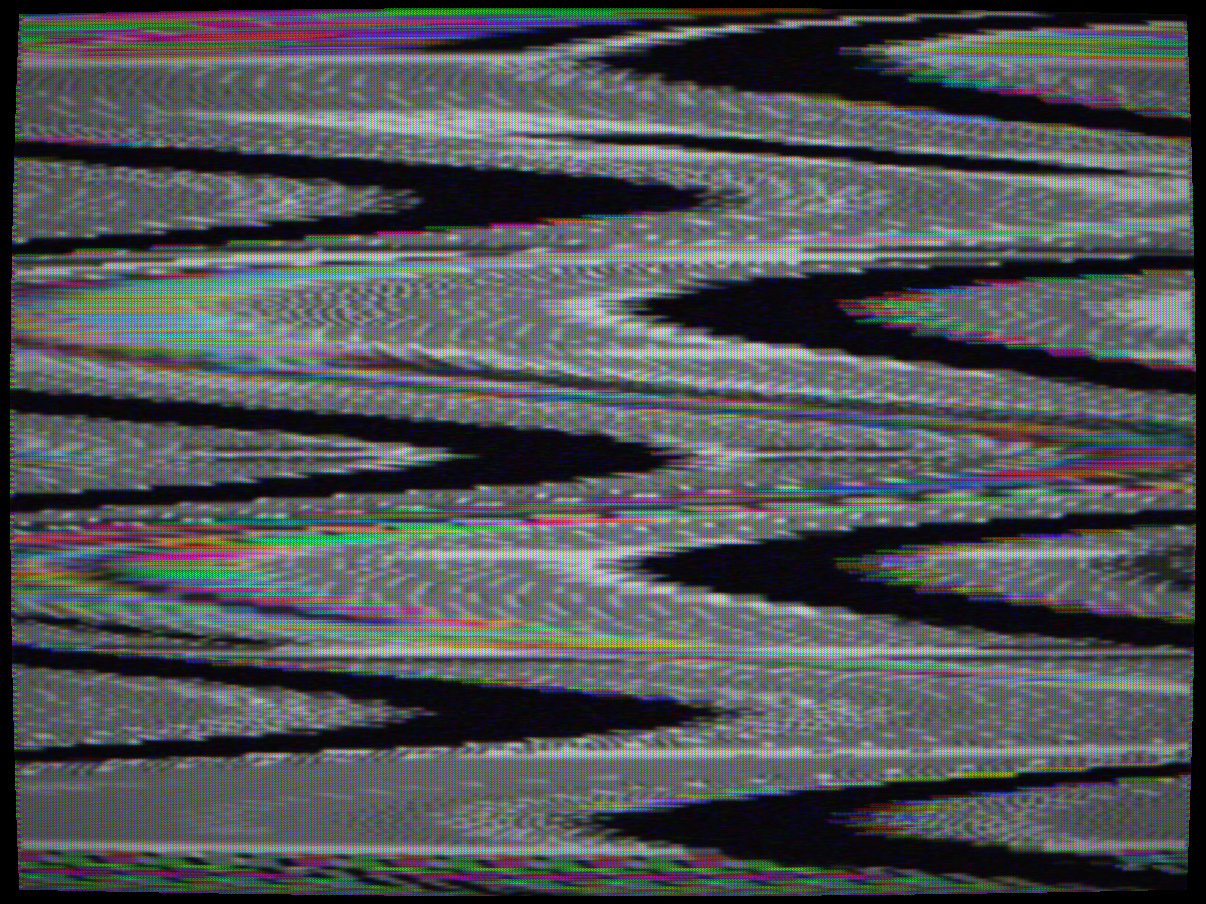
SSAVI/Z-TAC: sinusoidal H-oscillator hunt + whole-field colour-negative inversion
Discret 11: Canal+ per-line horizontal delay (SECAM-L); sync stays locked, active video tears
Eurocrypt: D2-MAC component cut-and-rotate (Single Cut); the first non-composite scrambler
Controls
Selects the conditional-access scrambling technique applied to the composite waveform. Each mode is modelled at signal level, sync pulses, colour burst, and active video are modified exactly as the original transmitter hardware did. Selecting any mode other than None automatically enables Signal Domain Mode.
None, No scrambling. Signal Domain Mode is not affected.
Sync Suppression (Oak Orion / Jerrold / early cable), The horizontal sync tips are raised from −40 IRE to blanking level (0 IRE), destroying the reference the receiver uses to lock horizontal and vertical scan. Simultaneously, the colour burst on the back porch is replaced each line with a random-phase carrier at the correct frequency and amplitude. This breaks the colour PLL as well as the sync PLL. A receiver without a descrambler loses both sync lock and colour: the picture rolls vertically, tears horizontally, and shifts through a rainbow of hues as the colour PLL hunts without a stable burst reference. The simulation drives the vertical oscillator into free-run, adds per-line H-shear via the active-video circular shift kernel, and replaces burst samples with random-phase sinusoids derived from a per-line hash.
Video Inversion (VideoCipher II (HBO, ESPN, C-band, 1986–1994)) Combines sync suppression (above) with per-line pseudo-random polarity inversion of the active video. An LFSR seeded by the decryption key determines which lines are inverted each field; approximately 50% of lines are inverted at any time. Sync-suppression effects (V-roll, H-shear, colour cycling) are fully active. The additional inversion makes content completely unrecognisable: inverted lines have their luma complemented (white becomes black, mid-grey stays mid-grey) while preserving scan-line sharpness. The result is a rolling field of interleaved normal and inverted lines.
Cut-and-Rotate (Videocrypt / Sky BSkyB / Eurocrypt, 1989–1996), Each active scan line is circularly rotated by a different pseudo-random number of samples. The sync pulse and colour burst are left completely intact, so the receiver locks normally and the picture is geometrically stable. The cut point changes each line according to a PRNG seeded by a Videocrypt-period key (re-keyed approximately every 2.5 seconds / 5 PAL fields). The visual result is every horizontal line shifted sideways by a different amount; flat-colour regions appear as a staircase of correctly-coloured strips at random horizontal positions, with a noise burst at each seam. The cut-and-rotate kernel operates entirely within the active video region, sync and burst samples are never disturbed.
Line Shuffle (Nagravision / Canal+, 1989–present), All active scan lines of each field are permuted according to a full-field Fisher-Yates shuffle seeded by the current key. The pixel content of each line is completely untouched, sync, burst, colour, and sharpness within every line are preserved. Only the vertical order of lines is scrambled. The key is refreshed every field. Without a descrambler, the image looks like a correctly-exposed photograph sliced into horizontal strips and randomly reassembled: fragments of the image appear at correct horizontal positions but at wrong heights.
SSAVI (Scientific Atlanta / Zenith Z-TAC (US cable, 1982–1988)) Sync tips are raised to blanking level (0 IRE) rather than fully suppressed. This leaves a partial sync reference in the waveform, causing the receiver's H-AFC loop to hunt sinusoidally, oscillating around the true line frequency rather than free-running linearly. The result is a smooth sinusoidal S-curve displacement sweeping across the frame (approximately 3–4 complete cycles per frame height), rather than the linear sawtooth that full sync suppression produces. Simultaneously, a field-level control bit toggles the polarity of the entire active video field, a full composite polarity flip (colour negative: luma complemented, chroma phase inverted 180°) affecting approximately 50% of fields. On non-subscribing receivers the field inversion toggles pseudo-randomly, producing an alternating normal/colour-negative flicker superimposed on the sinusoidal tearing. Three receiver-side effects accompany the scrambling: (1) the H-oscillator hunting accumulates phase error in countdown-based V-sync circuits, causing intermittent mild vertical instability with periodic re-lock to the intact VBI V-sync; (2) the burst gate fails to open (it is H-sync triggered), so the colour PLL free-runs and hue drifts slowly at approximately 0.15 Hz; (3) the Automatic Colour Control loop sees no burst and ramps its gain to its clamp maximum, producing characteristic oversaturation of the colour-negative image.
Discret 11 (Canal+ (French terrestrial, 1984)) A composite-domain system that leaves the picture locked: each active line is delayed horizontally by one of three small amounts (0, one, or two quanta of about 902 ns (four colour-subcarrier periods)) chosen per line by a fixed pseudo-random sequence from an 11-bit shift register. Sync and burst are untouched, so the receiver stays H/V-locked; the active video tears at every vertical edge into a shifting staircase. Modelled on SECAM-L (Canal+'s terrestrial standard) but works on any composite standard.
Eurocrypt (TDF / Canal+ / Scandinavian satellite, 1990s), The first scrambler in the set that is not composite-based: it operates on the time-multiplexed component slots of D2-MAC, so it requires a MAC standard. The luma and chroma time slots are rotated about a per-line cut point, the time-domain equivalent of Videocrypt's cut-and-rotate. A separate Single Cut / Double Cut control selects whether the whole active region rotates as one block (Single) or the chroma and luma slots rotate independently about different cut points (Double, the more destructive). The line sync and the digital sound/data burst are left intact, so the receiver locks and decodes data normally while the picture tears into horizontally-wrapped bands.
Interactions: All modes require Signal Domain Mode (enabled automatically). Sync Suppress and Video Inversion interact with Vertical Hold, increasing V-Hold offset accelerates the free-running roll. SSAVI also interacts with Vertical Hold: H-oscillator hunting accumulates V-countdown phase error, causing the V-oscillator to drift episodically and re-lock to the intact VBI V-sync. Cut-and-Rotate and Line Shuffle are geometrically stable. Sync Suppress and Video Inversion are most visible on NTSC; SSAVI works on any standard. VCR recording of a scrambled signal (enabling both Pay TV and VCR) produces the authentic second-generation degradation seen when subscribers tried to tape premium content through their converter box.
Controls the magnitude of the scrambling effect. At 0.0, scrambling is bypassed regardless of mode. At 1.0, the full effect is applied. Intermediate values simulate a receiver that is partially decoding, a weak descrambler, a mismatched standard, or a degraded key signal.
Sync Suppression: At full strength, sync tips are raised to blanking level (0 IRE) and the colour burst is fully randomised per line. As strength decreases, sync tips are only partially raised, the burst randomisation is attenuated, and the V-oscillator approaches lock more easily. At intermediate values the picture rolls slowly rather than continuously.
Video Inversion: Controls the H-shear amplitude and V-roll rate independently of the sync suppression component. At full strength, both components are maximally active. The inversion itself is binary (a line is either inverted or not) so Strength does not affect inversion probability, it affects the sync-loss artefacts that accompany it.
Cut-and-Rotate: Sets the maximum cut-point range as a fraction of the active line width. At 1.0, cut points are distributed uniformly across the full active line (~910 samples for PAL). At 0.5, cut points are limited to the first half of the line, producing a less severe staircase. The seam noise burst at each rotation point is also scaled by Strength.
Line Shuffle: The Fisher-Yates permutation is always a full permutation of all active lines. Strength attenuates the visual impact by blending scrambled and unscrambled line positions. At 1.0, every line is at a fully permuted position; at 0.5, approximately half the lines are at their original positions.
SSAVI: Controls the amplitude of the sinusoidal H-oscillator displacement and the probability of field-level colour inversion simultaneously. At 1.0, the displacement sweeps across the full ±50% of the active line width in smooth sinusoidal waves, and all flagged fields are fully colour-negative inverted (full amplitude, luma and chroma at correct magnitude, just polarity-flipped). At lower values the displacement amplitude decreases and the inversion becomes probabilistic: some flagged fields pass through unmodified, simulating a marginal descrambler that misses a fraction of inversion events. Each inverted field is always fully inverted, there is no partial-blend desaturation at intermediate strengths. The OSC FREQ control (also shown for this mode) sets the number of sinusoidal cycles per frame height; approximately 3.5 cycles matches the visual reference from SSAVI FAQ Fig. 1 (the only known captured image of live SSAVI output). No primary source documents this value explicitly.
How to test: Set any mode, set Strength to 1.0, then slowly drag Strength toward 0. Observe the partial decoding artefacts that appear at intermediate values, these match the visual behaviour seen on real receivers with a descrambler that had the wrong card, wrong key generation, or a marginal RF input.
Signal-domain requirement
All Pay TV modes require Signal Domain Mode because the scrambling operations are defined at composite waveform level, they modify individual samples of the sync pulse, colour burst, and active video waveform. There is no pixel-domain equivalent that could faithfully model the downstream consequences (sync loss, colour PLL break, seam noise, interaction with VCR colour-under). Selecting any scramble mode enables Signal Domain Mode automatically; it can be manually disabled after selection if you need to compare, but the scrambling effect will be absent.
Historical notes
None of these systems were designed to be unbreakable, they were designed to be cheap to implement in consumer hardware while being difficult enough to defeat with 1980s electronics. Sync suppression was broken almost immediately by hobbyists with a sync-restoration circuit. VideoCipher II was defeated by pirate descramblers that extracted the LFSR seed from the VBI; VC-II RS (Renewable Security) extended the system’s life by moving the seed to a smartcard that could be re-keyed, but each successive card generation was compromised within months of release. Videocrypt was similarly defeated in stages by emulator cards. Nagravision’s cryptographic layer was stronger, but the physical scrambling is otherwise the same. SSAVI and Z-TAC were defeated by circuits that detected the raised-sync pattern (distinguishing it from normal blanking level) and identified the field-inversion flag from the VBI data stream, re-inverting alternate fields in real time. The sinusoidal H-displacement was corrected by a phase-locked sync restoration stage that clamped the oscillator to the true line frequency; once the PLL was locked, the displacement vanished. Digital conditional access (DVB-CA, Mediaguard, Irdeto) rendered all of these systems obsolete in the late 1990s.